Serving Commercial Projects Across Central Texas
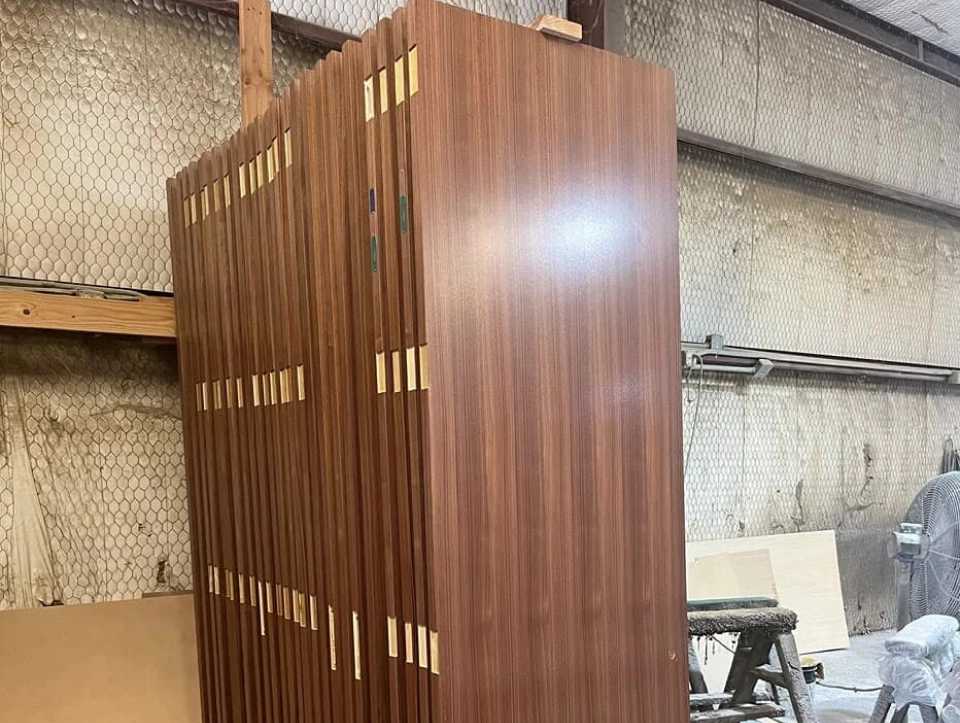
Our product capabilities span the full spectrum of architectural wood door applications. Plastic laminate surfaces offer durability and design flexibility for high-traffic institutional settings. Wood veneer doors provide the aesthetic warmth and visual character that define professional office environments and hospitality spaces. Each finish option undergoes rigorous preparation and application processes that ensure surface durability, color consistency, and resistance to the wear patterns typical in commercial use. Material selection, core construction, and finish specification work together to create doors that perform reliably across decades of service.
Construction activity throughout Waco continues to expand, with new medical facilities, educational buildings, and commercial developments creating steady demand for architectural millwork that meets current building codes and performance standards. Projects often involve coordination with multiple trades, tight installation schedules, and specification requirements that leave no room for errors or delays. Manufacturing lead times, delivery coordination, and installation support all contribute to project success. Our production scheduling accommodates the realities of construction timelines while maintaining the quality control necessary for specification-grade architectural products.
Restoration work on historic buildings presents distinct challenges that require balancing preservation standards with modern safety requirements. Matching existing door designs, replicating historical profiles, and incorporating fire-rating or accessibility improvements into period-appropriate assemblies demands both craftsmanship and technical knowledge. Downtown Waco’s architectural heritage includes buildings where door replacement must respect original design intent while meeting current code requirements. These projects require detailed documentation, custom millwork capabilities, and understanding of historical construction methods.
Design assistance helps architects and contractors navigate the complexities of door specification. Code requirements, hardware compatibility, frame coordination, and finish selection all influence final performance and installed cost. Early involvement in the design process identifies potential conflicts, suggests cost-effective alternatives, and ensures that specified products align with project goals and budget parameters. Technical support extends through submittal preparation, shop drawing review, and field coordination to deliver results that meet design intent.
Installation quality directly affects door performance, regardless of manufacturing precision. Proper frame preparation, hinge mounting, hardware installation, and clearance adjustment all contribute to operational smoothness and longevity. While we focus primarily on manufacturing and delivery, we recognize that successful projects depend on skilled installation practices. General repairs and adjustments address field conditions that arise during construction or over the service life of the building. Understanding common installation challenges helps us design products that perform well in real-world conditions.
Lead times for custom architectural millwork require planning that accounts for design finalization, manufacturing production, and delivery logistics. Standard catalog products may ship quickly, but custom sizes, special cores, or unique finish specifications require manufacturing time that must align with construction schedules. Accurate material specifications, timely approval of shop drawings, and clear communication regarding delivery requirements all contribute to on-time project completion. Our production capacity handles projects ranging from single custom doors to complete building packages involving hundreds of openings.
Quality control processes verify that every door meets specification requirements before leaving our facility. Dimensional accuracy, core construction, surface finish, and hardware preparation all undergo inspection protocols designed to identify and correct issues before products reach the job site. Documentation including fire-rating certifications, material safety data, and installation instructions accompanies each shipment. These quality assurance measures reduce callbacks, installation delays, and the costly corrections that result from manufacturing defects or specification mismatches.
The decision to specify architectural wood doors involves evaluating performance requirements, aesthetic goals, budget constraints, and long-term maintenance considerations. Hollow metal doors may offer advantages in certain applications, but wood doors provide acoustic performance, design flexibility, and visual warmth that metal cannot match. Solid core construction, available in various densities and materials, tailors door performance to specific applications. Particleboard cores offer economical solutions for standard applications. Mineral cores provide fire-rating in assemblies requiring one to three-hour ratings. Lead cores address radiation shielding requirements in medical and research facilities.
Serving contractors and building professionals throughout the Waco area means understanding local construction practices, preferred hardware suppliers, and the inspection requirements of local building officials. Familiarity with regional suppliers, delivery logistics, and installation crews helps ensure smooth project execution. Our location allows us to support projects across Central Texas while maintaining the responsiveness that local projects demand. Whether the project involves work in Dallas, construction in Fort Worth, or developments throughout the region, we provide the same manufacturing quality and technical support.
Door hardware selection significantly impacts both door performance and user experience. Hinges must support door weight while allowing smooth operation. Locksets provide security appropriate to the application while meeting accessibility requirements. Closers control door speed and latching force. Coordinators on pairs of fire-rated doors ensure proper closing sequence. Threshold and weather-stripping selections affect acoustic performance and environmental separation. Hardware compatibility verification during the specification phase prevents field conflicts and ensures that all components work together as intended.
Maintenance requirements for architectural wood doors remain modest when products are properly manufactured and installed. Periodic hardware adjustment, finish touch-up in high-wear areas, and protection from moisture infiltration preserve appearance and function across years of service. Understanding typical wear patterns helps building managers develop maintenance schedules that address minor issues before they require costly repairs or premature replacement. Properly maintained wood doors regularly provide 30 years or more of reliable service in commercial applications.
New construction projects benefit from early coordination between door suppliers, architects, and general contractors. Frame types, wall construction, and door specifications must align to ensure proper fit and performance. Conflicts between door thickness, frame profiles, and wall dimensions create expensive field modifications when discovered during construction. Submittals and shop drawings provide opportunities to identify and resolve these issues during the design phase. Our team is available to review project requirements and provide technical guidance that supports successful outcomes.
Finishing services encompass the surface preparation, material application, and quality control necessary to deliver doors ready for installation. Factory finishing offers superior results compared to field finishing, with controlled application environments, professional equipment, and quality control that ensures consistent results. Finish options include stains that enhance natural wood grain, paints that provide uniform color coverage, and clear coats that protect underlying materials while maintaining natural appearance. Finish durability depends on proper surface preparation, appropriate material selection for the intended use, and application techniques that create uniform coverage and adhesion.
Every commercial building project involves coordination among multiple stakeholders with different priorities and concerns. Architects focus on design intent and specification compliance. General contractors manage schedules and budgets. Specialty trades coordinate installation sequences. Building owners evaluate long-term performance and maintenance costs. Successful door suppliers understand these different perspectives and provide support that addresses each stakeholder’s concerns. Clear communication, accurate documentation, and reliable delivery all contribute to projects that complete on schedule and perform as intended.